
4/28/2025 4:43:10 PM
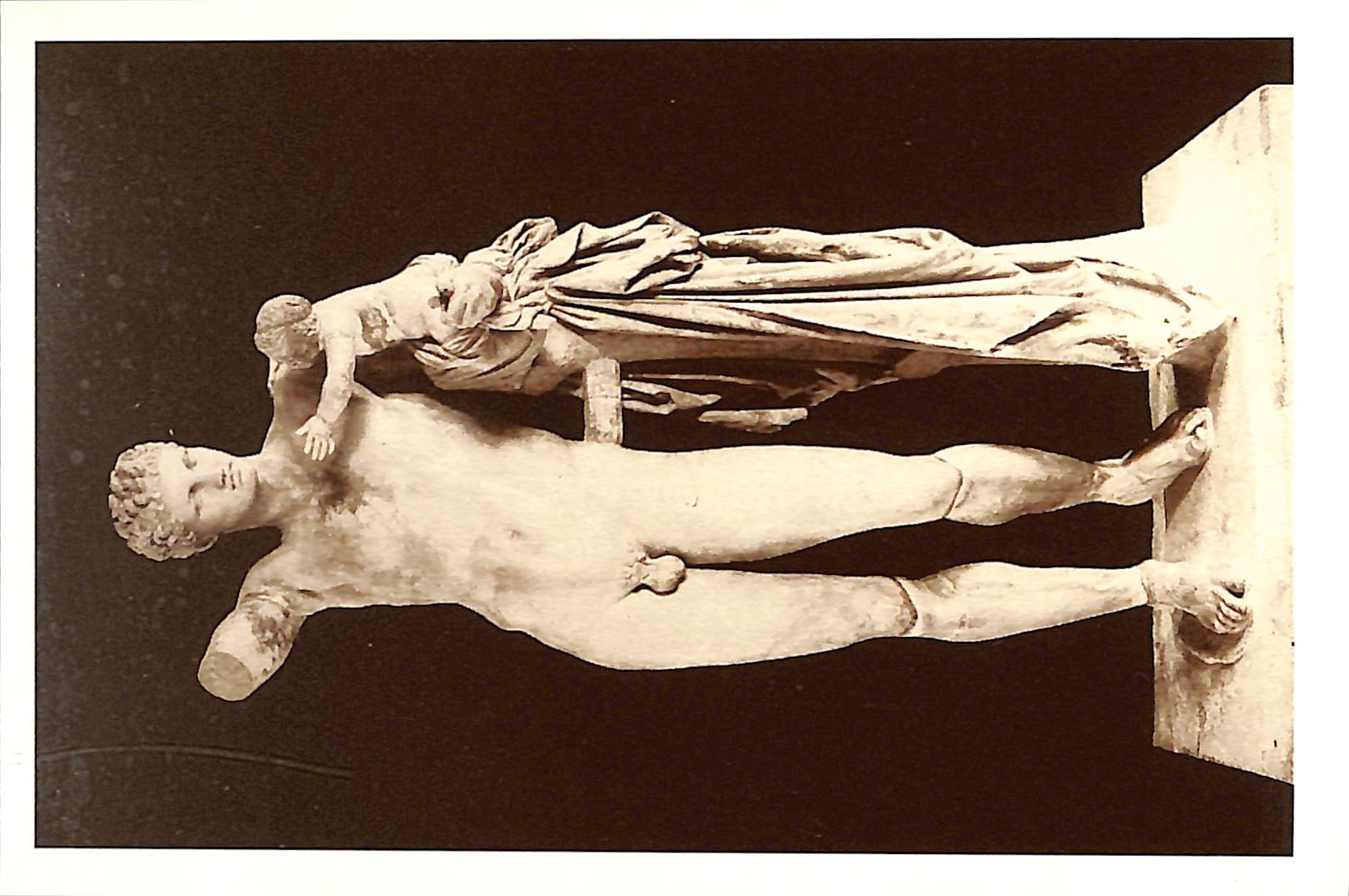
The Hermes of Praxiteles at the Archaeological Museum of Olympia
The Hermes of Praxiteles is an ancient Greek marble sculpture made of Parian marble, nearly intact, with a height of 2.10 meters. It depicts Hermes, the messenger of the gods, carrying the infant Dionysus from Mount Olympus to the region of Boeotia, where he would be raised by his divine aunts, the nymph sisters of his mother Semeli. During this journey, undertaken on Zeus’s command, Hermes is shown resting against a tree trunk. Many archaeologists believe this is an original work by the renowned Athenian sculptor Praxiteles, son of Cephisodotus, the only one of his original creations to have survived from antiquity. According to this view, the statue dates to 340–330 BC, during the Late Classical period. Another interpretation suggests that the statue is not an original but rather a Roman copy. The sculpture was discovered by the German archaeological mission during the 1877 excavations inside the Temple of Hera at Olympia and is now displayed at the Archaeological Museum of Olympia. Pictured: Hermes of Praxiteles at the Archaeological Museum of Olympia in 1890. ©Municipal Photography Museum of Kalamaria ‘Christos Kalemkeris’.