
4/28/2025 4:39:39 PM
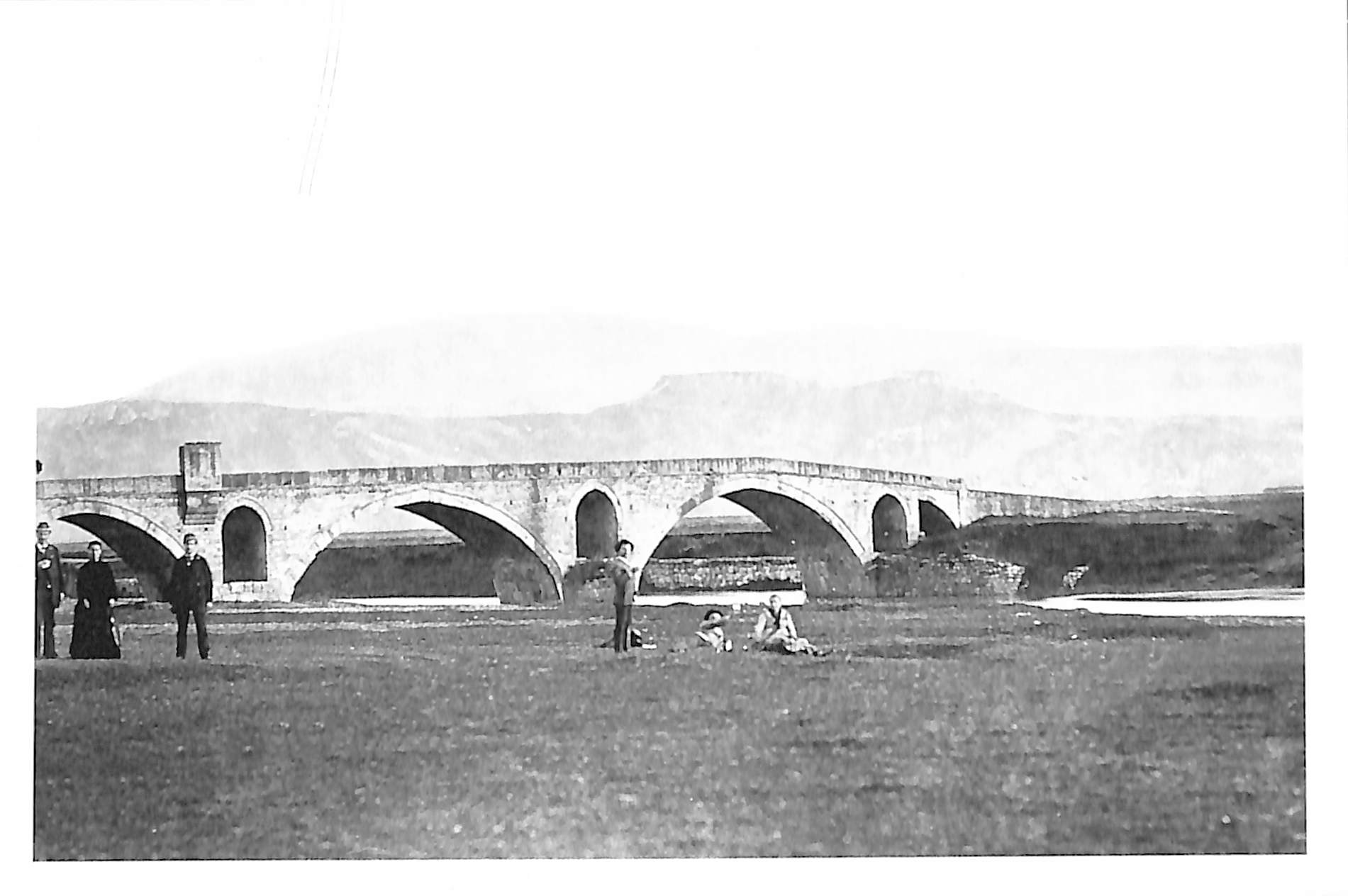
The stone arched bridge of the Enipeus River outside of Farsala
One of the most famous arched bridges from the Ottoman period in Greece is the multi-arched bridge over the Enipeus River, built to the north of Farsala, along the road connecting Larissa with Lamia, formerly known as the "Pasha's Bridge." It was constructed in 1752 under the orders of the then Ottoman governor of Thessaly, Ahmed Ramit Pasha, and it became an important engineering work, not only of its time but also for several decades thereafter, as it bridged the main road connecting Northern and Southern Greece. This massive stone bridge consists of seven unequal-sized arches, varying in both span and height. The arch with the widest span is located to the south, and the rest decrease in size moving northward. The smallest and northernmost arch was built later, in a second phase, and has architectural differences from the others, as it is reinforced with a stone parapet. The southernmost and largest arch has always bridged the deep bed of the river. The total length of the structure reaches 110 meters, and its width is 5.50 meters. The bridge is a declared protected monument, and since the 1990s, with the construction of a new bridge immediately to the east, it has been decommissioned. Pictured: The stone arched bridge of the Enipeus River outside of Farsala, towards the village of Tsinari, in 1884. ©Municipal Photography Museum of Kalamaria ‘Christos Kalemkeris’.